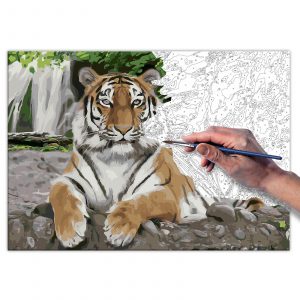
Paint By Numbers Guide: 9 Steps to Creating Your Masterpiece
Paint By Numbers Guide: 9 Steps to Creating Your Masterpiece Table of Contents Welcome to the world of paint by numbers! This fun and

Reading time: 4 minutes
Writing slopes, sometimes referred to as writing slants or slant boards, are used for a variety of tasks beyond just traditional writing. Drawing, colouring, calligraphy and crafting are just a few of the additional uses for these boards.
With such versatility, it is useful to know the benefits that writing slopes provide.
This is perhaps the biggest benefit and the one which most people are looking for help with.
The majority of slopes are set around the optimum angle of 20°. Working at this angle pushes your back, shoulders and neck into a more upright and stable position. This in turn provides better distal control of your wrist and fingers for writing and drawing activities.
It is no surprise then that writing slopes can help to alleviate pains associated with the back, neck, shoulders and wrists when writing.
It’s important to note, however, that to gain the full posture benefits that a good writing slope can offer, best practices should be adhered to such as:
Many of us spend a lot of time copying and taking notes whether it’s from a computer screen or a white board. Being in the correct seating position and using a slope facilitates this process.
Writing slopes can help us reach the optimum distance between our eyes and our work so that reading and writing become easier. This distance can be achieved by maintaining the equivalent distance from that of our chin to our elbow. This is known as Harmon’s distance.
Harmon’s distance applies more than ever in today’s digital age of laptops and tablets. Writing slopes can provide a benefit when using these devices too. Whether it is typing, reading the screen or even giving presentations.
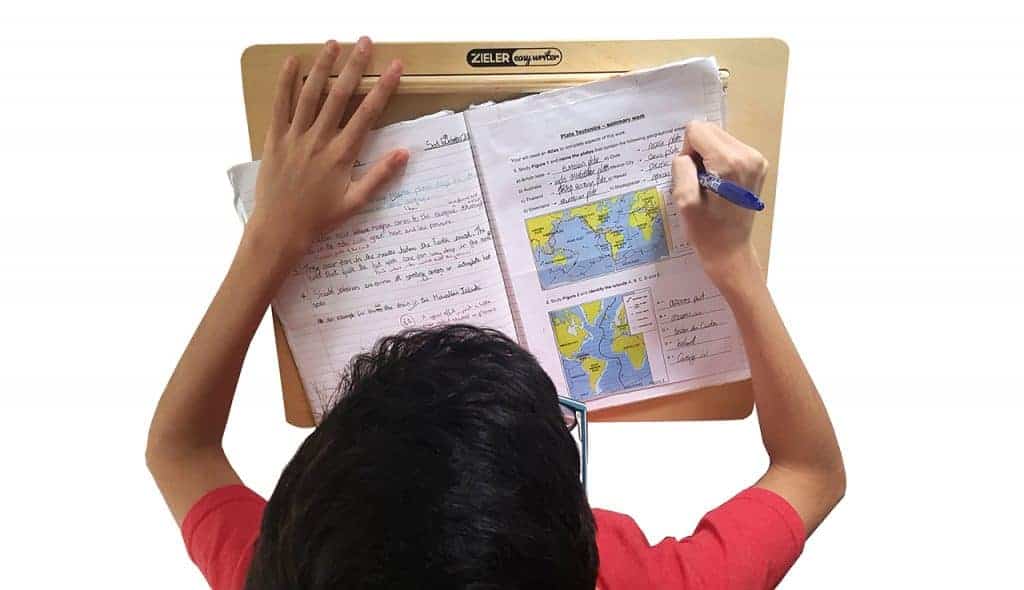
Younger writers sometimes have difficulty reaching the entire paper while flat on a desk. A good-sized writing slope set at the right angle reduces the reach from the top to the bottom of the page. The slope should make using the non-writing hand (known has the supportive or non-dominant hand) easier to reach the paper; this is necessary to provide paper stability when writing. Handwriting should be a two-handed task involving both the writing and supporting hand.
When handwriting the best body position for an efficient hold of a writing tool is in wrist extension – this is when the wrist is bending upwards towards you. The angled position of the writing slope promotes this position.
This in turn provides better support for holding a writing instrument properly for legible and fluent handwriting. With the wrist in the correct position there should be less of a tendency to grip tightly onto the writing tool and less of a tendency to apply vast pressure into the page.
These are just some of the benefits of using a writing slope. If you require further assistance on best handwriting practices, the National Handwriting Association website www.nha-handwriting.org.uk provides good advice.
If you are thinking of purchasing a writing slope be sure to read our buying guide before doing so.

Paint By Numbers Guide: 9 Steps to Creating Your Masterpiece Table of Contents Welcome to the world of paint by numbers! This fun and

9 Things You Should Know About Gesso and How You Should Use It Table of Contents 1. What is Gesso? If you are starting out

An Introduction to Acrylic Paint & How to Get the Best From It Table of Contents Loved by artists and crafters all over the world,

Acrylic Varnish Spray: The Best Way to Protect Your Art Paintings Table of Contents As an artist, we know you have taken great time and
Still Water Reflection Welcome to the 30 Minute Masterpiece with me Trish Green – Artist Ambassador at Zieler. I am a self-taught artist aiming to
Zieler’s Art Portfolio Presentation Case & Art Folder – An All-In-One Solution! Imagine an art case that can double up as a portfolio case. One