Paint By Numbers Guide: 9 Steps to Creating Your Masterpiece Table of Contents Welcome to the world of paint by numbers! This fun and
Reading time: 8 minutes
Writing slopes, sometimes referred to as writing slants or slant boards, can help to promote correct writing posture. Many of us, perhaps unknowingly, slouch when writing or drawing. Children often do it when they are colouring.
Available in acrylic, plastic and wood writing slopes are known to help alleviate pains associated with the back, neck, shoulders and wrists when writing. So it is useful to know the type of things you will want to consider before you purchase one.
The optimum writing angle is about 20° so you want to ensure that your slope is around this mark which most writing slopes are. To check this you can use the help of an app on your phone. Place the phone on to the board and it will show you the angle of the slope. Whilst these apps may not be 100% accurate, they will at least give you an idea. Also, be aware that the surface on which you place the board may not be exactly 180° flat so this may impact the results you get.
This is perhaps the most overlooked factor when considering a slope. There are many advantages for slopes with larger surface areas, such as:
As an adult when was the last time you wrote without having both hands on the writing pad or writing surface? Probably never.
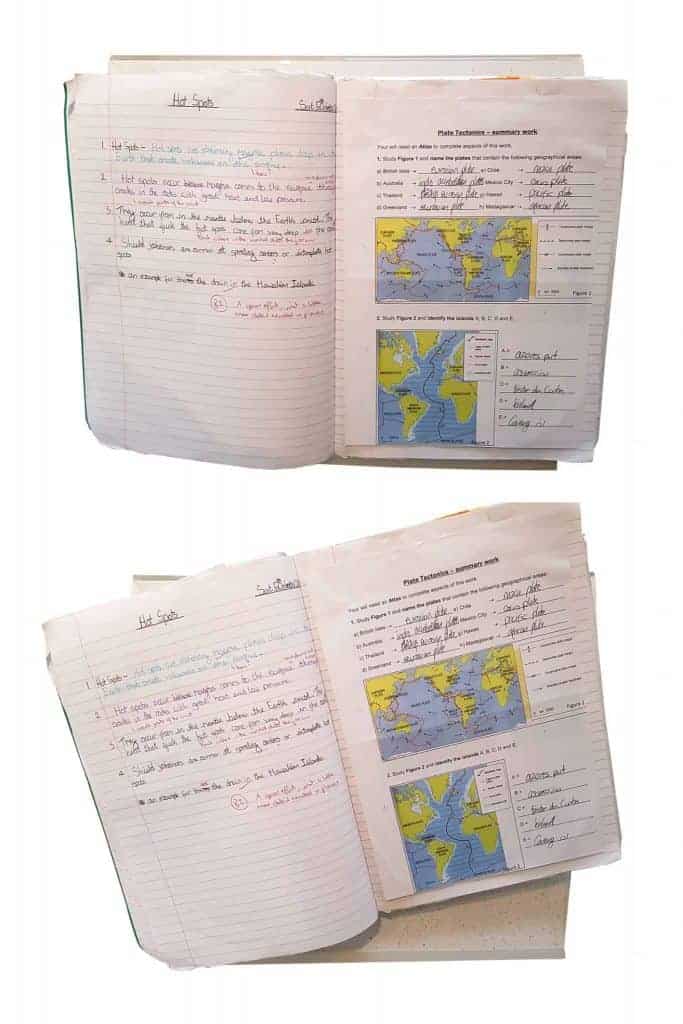
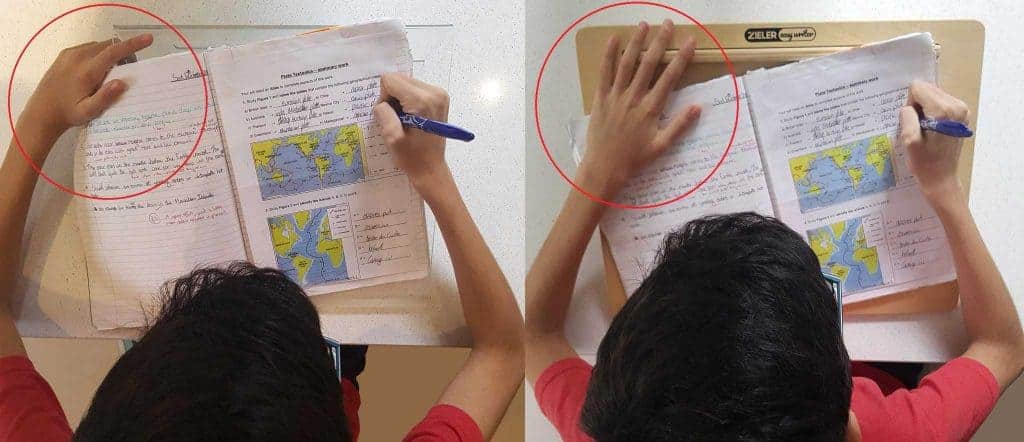
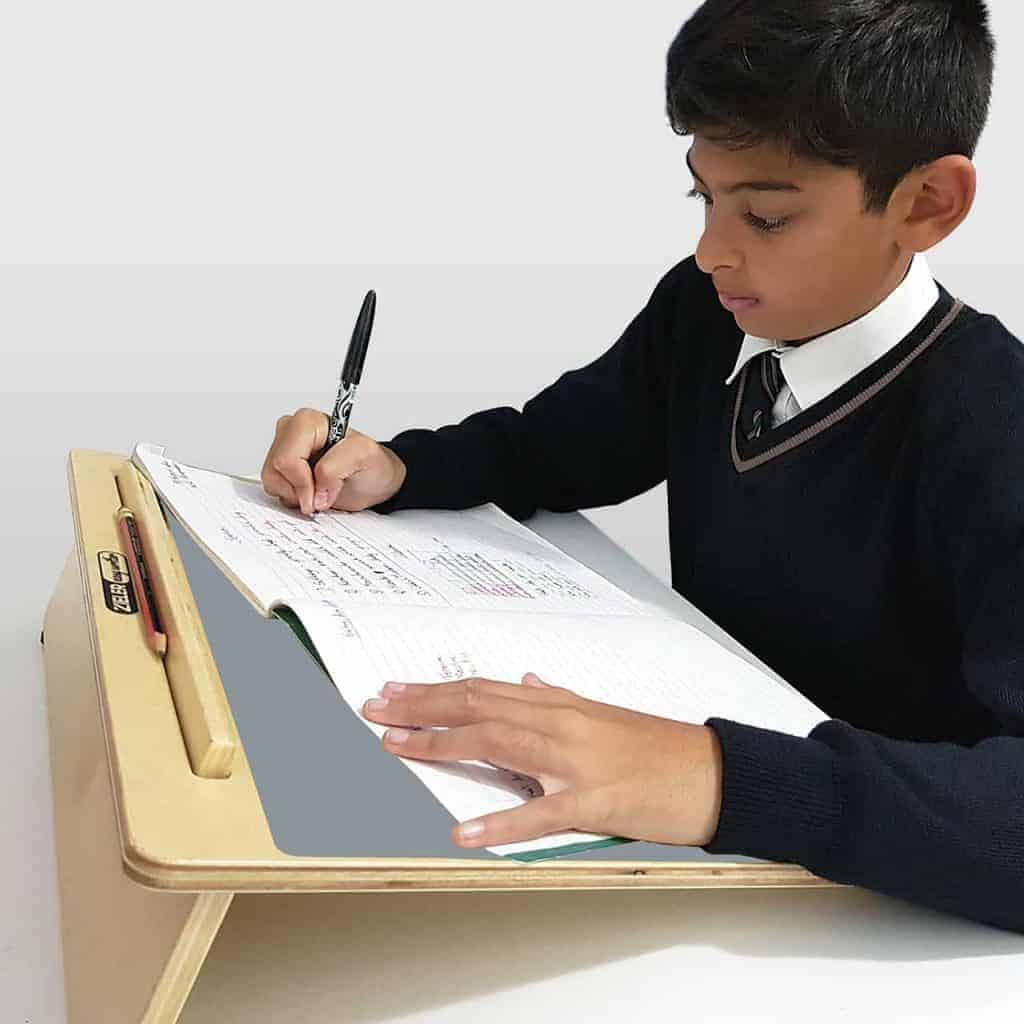
In terms of good handwriting practice (and as per the National Handwriting Association www.nha-handwriting.org.uk), it is recommended that handwriting is a two-handed task. The dominant hand writes (or draws) and the supportive (non-dominant) hand should be supporting the paper.
In children this is part of the development process to writing correctly. Therefore, if the surface of slope is slippery it should encourage the child to use of both hands when writing. Otherwise, the page or book may slide down the slope.
For these reasons the surface of the Zieler Easywriter slope has been designed to aid the handwriting development process. It has a lacquered finish so that the paper may slide down if not supported by the non-dominant hand.
In order to aid those developing the use of the supportive hand when writing (such as young children or those with difficulties), a small piece of blue-tac at the bottom of the page can be used to prevent the page from slipping down. The piece of blue-tac can then get smaller and smaller as the child begins to develop the use of their supportive hand.
An alternative to using blue-tac for grip is to place a mat onto the slope. A piece of Dycem® (a non-slip material) can be used for this and can work well.
Grip mats offer more comfort when writing so are a useful addition. In fact, they can also be used as a writing aid on any hard surfaces, not just writing slopes.
The Zieler Easywriter Grip Mat is purpose-designed to fit the Zieler writing slope.
If you plan to use a grip mat, be aware that when a single page (a loose paper sheet) is being used, it is recommended to add a piece of backing card in between the paper and the mat. This helps to ensure that the writing instrument does not pierce through the paper thereby ruining the paper and possibly the mat.
The purpose of a writing slope is to encourage correct handwriting practises. One of these, as mentioned earlier, should be to place the page at an angle.
It is recommended that right-handed writers turn their paper at an angle between 20° and 45° (anti-clockwise) in order to facilitate the writing process. For left-handers this angle is recommended to be between 30° and 45°.
Holding the paper dead straight is not good handwriting practice. Some slopes (including children’s ones) are designed with a ridge at the bottom to rest your work onto and, presumably, to keep it dead straight. For reading this may be helpful perhaps, but for writing you will need to decide whether you feel it might encourage the page to be held straight.
If you are purchasing a slope with a ridge try to check the size of the ridge and whether it may constrain you writing properly by getting in the way of your wrist or forearm.
The Zieler Easywriter slope does not come with a ridge.
It goes without saying that you will want a slope that is hard-wearing and that will last. Perhaps the biggest drawback to acrylic and plastic slopes is their susceptibility to cracking or breaking especially when being transported or if dropped.
Wooden slopes tend to be a little heavier and more robust though this does, of course, depend on the quality and the amount of the wood used as well as the size of the board.
The Zieler Easywriter slope is made from 7 layers of high-grade plywood to ensure that it will stand the test of time and use.
The last thing you want for you or your child is for a slope to move around when writing on it so stability should be a key consideration.
Acrylic slopes normally have a thin strip of silicon at the edges to help prevent the board from moving. Other slopes either come with no grip or may use a different type of rubber.
The Zieler writing slope is designed with four hard-wearing rubber feet to withstand the downward force that is produced when writing at an angle so that the board remains still.
It should be noted that if you find your slope board moving when in use, it may not necessarily be the board. It could be related to the height of the work surface you are using or the height of your chair. Handwriting should be comfortable and should flow. Often slopes will move if you are placing your full body weight onto them whilst writing which will limit the comfort and flow of your handwriting. If you sit comfortably with your bottom to the back of the chair and a fist distance from the table and ensure your feet are touching the floor for full support, you should have less need to lean onto the slope.
Most users of slopes will need to move about with their slope or, at the least, put it aside in order to clear their work space.
When considering portability it is important to note that some writing slopes cannot be dismantled whilst others can. Those that cannot be dismantled (such as acrylic, some plastic and some wooden slopes) can be difficult to transport due to their bulky nature.
Some slopes, such as acrylic ones, usually have the benefit of being able to stack on top of one another which is handy where you have more than one slope such as a classroom environment.
There are slopes which can be dismantled or folded. When considering a folding slope you will want to ensure that the hinge is fixed well and is adequate to withstand wear and tear as well as the downward force that will be applied when the slope is in use. Folding slopes can be extremely portable and will store easily.
The Zieler Easywriter dismantles into two parts so that the slope can be easily transported and stored away.
Prices and quality of writing slopes can differ considerably. There is no perfect writing slope for everyone. It is very much a personal choice depending on your needs. Strong consideration should be given to factors such as the size of the slope, how long you plan to use it and whether you will be need to move it around with it.
If you require advice on handwriting posture, the National Handwriting Association website www.nha-handwriting.org.uk offers sound and reliable advice.
To assist you further with the Zieler Easywriter slope please see the summary table below.
More helpful guides:

Paint By Numbers Guide: 9 Steps to Creating Your Masterpiece Table of Contents Welcome to the world of paint by numbers! This fun and

9 Things You Should Know About Gesso and How You Should Use It Table of Contents 1. What is Gesso? If you are starting out
An Introduction to Acrylic Paint & How to Get the Best From It Table of Contents Loved by artists and crafters all over the world,
Acrylic Varnish Spray: The Best Way to Protect Your Art Paintings Table of Contents As an artist, we know you have taken great time and
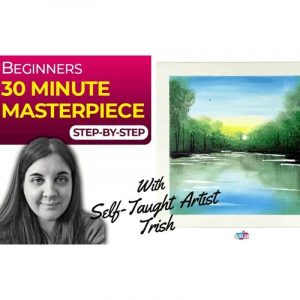
Still Water Reflection Welcome to the 30 Minute Masterpiece with me Trish Green – Artist Ambassador at Zieler. I am a self-taught artist aiming to
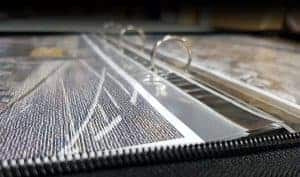
Zieler’s Art Portfolio Presentation Case & Art Folder – An All-In-One Solution! Imagine an art case that can double up as a portfolio case. One